



Description
Next-Gen Smart Solar Water Heater System: Intelligent Upgrade to Replace Traditional Hot Water Solutions
Say goodbye to two big issues with old water heaters: traditional solar models “depend on good weather,” and electric ones “cost a lot to run.” This solar water heater system focuses on “self-sustaining solar power + smart precise temperature control.” It combines five highly adaptable components to meet needs like daily home washing, centralized hot water for homestays, and multi-scene use in villas. It upgrades hot water supply in three ways—”energy-saving, stable, worry-free”—and has become the top choice for modern homes.
I. Core Components: A Solid Foundation for Stable Operation, Quality in Details
We subject all product components to rigorous adaptation testing. They balance durability and energy efficiency to ensure long-term stable use. Below are the key parts:
1. High-Efficiency Solar Panels
These panels use monocrystalline silicon, with a photoelectric conversion rate of 22%-24%. They can even absorb scattered light to generate power on cloudy days. We add tempered glass panels (wind and hail resistant) to them, so they last over 15 years outdoors. They provide continuous clean energy for heating. Compared to traditional electric water heaters, they cut monthly electricity costs by over 80%.
2. Intelligent Water Heater Controller
It uses an advanced DSP chip, boosting response speed by 30%. It receives real-time data from the temperature-sensing probe, adjusts the heating element’s power, and syncs data with the Tuya APP in milliseconds. This avoids the “slow response and easy misjudgment” issues of traditional controllers.
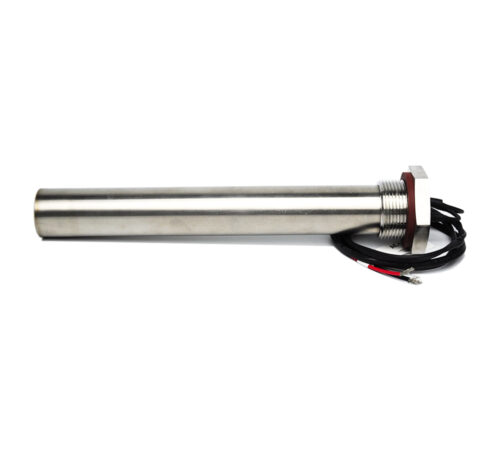
3. High-Precision Temperature-Sensing Probe
We use a stainless steel waterproof probe here. It measures temperatures from 0-100℃, with an error of ≤±0.5℃. We insert it into the middle of the water tank to monitor temperature accurately. This prevents overheating or insufficient heating caused by “inaccurate surface temperature reads.” It updates data every 30 seconds, so the APP display matches the actual water temperature.
4. Dual-Mode Heating Elements
These are PTC heating elements, with a thermal efficiency of over 95%. They support two modes: “solar priority heating” and “mains power auxiliary heating.” On sunny days, they use solar power first. On cloudy/rainy days, they switch to mains power automatically. This keeps the tank’s water temperature stable at 30-60℃ (in -5℃ to 40℃ environments), so you have hot water anytime.
5. Long-Lasting Insulated Water Tank
It has a food-grade 304 stainless steel inner tank (corrosion and rust proof). We wrap it with a 50mm thick polyurethane foam insulation layer—this boosts insulation performance by 40%. It maintains a constant temperature for 72 hours after power loss (water temperature drops ≤5℃). This fixes the “fast heat loss and repeated heating waste” problem of traditional tanks.
II. Intelligent Control via Tuya APP: Visualized Data, Flexible Control, Immersive Scenario Experience
The heater works with the Tuya Smart APP (supports iOS/Android). You can bind the device by scanning a QR code—no complex setup needed. This breaks the “on-site only” limit of traditional heaters and covers all hot water needs.
1. Real-Time Data Monitoring: Transparent, Controllable Energy Use
Open the APP to see four key data points: solar panel real-time voltage (60-450Vdc, clearly shown), power generation (see “how much electricity is made now”), tank’s real-time water temperature (accurate to 1℃), and total power generation (stats by month/year, see “how much you save on electricity”). For example, home users can see the real benefit: “save \(100-\)200 on monthly electricity bills” via power generation data.
2. Customizable Temperature Control: Fits Different Needs
You can manually set the target water temperature (20-90℃ adjustable). In summer, set it to around 40℃—gentle and not scalding. In winter, use the APP to set it to around 50℃. You can use hot water right when you get home, no waiting.
3. Scheduled Heating + Smart Temperature Control: Matches Your Routine
You can set 2 scheduled heating times. For example, regular families can choose “6:00-7:00 AM (morning washing)” and “7:00-9:00 PM (bathing time)”. Heating starts automatically at the set times. At other times, the device switches to low-power insulation mode. Homestay users can use the controller’s smart temperature control to keep water temperature steady when multiple rooms use hot water at once.
4. Fault Alerts + Remote Troubleshooting: Less After-Sales Hassle
If the device malfunctions (e.g., faulty temperature probe, heating element short circuit, tank overheating), the APP sends a pop-up alert right away. It also marks the fault type (e.g., “E1: Abnormal Temperature-Sensing Probe”). You can do basic troubleshooting with the prompts. If you can’t fix it, use the device’s fault log to contact after-sales. This avoids the “unclear fault causes and repeated repair trips” problem of traditional heaters.
III. Replacing Traditional Water Heaters: Four Core Advantages to Fix Practical Pain Points
Compared to traditional solar, electric, and gas water heaters, solar water heater system upgraded advantages better fit modern users’ needs:
- More Energy-Saving: It uses solar power first. It only uses a little mains power on cloudy/rainy days. Its annual energy use is just 1/5 of traditional electric heaters. For a family of three, annual electricity costs drop from \(2,400 to under \)500.
- More Intelligent: Remote control + data visualization means no more going to the balcony to adjust temperature. All info is clear on your phone. Even the elderly can use it easily via the APP’s “Simple Mode”.
- More Reliable: It starts normally in -5℃ low temperatures (traditional solar heaters often have frozen pipes). The fault alert function warns you early, so you avoid the embarrassment of “suddenly running out of hot water”. Core components have a 5-year warranty—2-3 years longer than traditional heaters.
- More Worry-Free: It keeps heat for 72 hours. Even if you come home after a 3-day business trip, there’s still hot water in the tank. You don’t need to clean the inner tank regularly (the 304 stainless steel tank resists scaling). This cuts maintenance frequency by 80% compared to traditional electric heaters.
IV. Typical Usage Scenarios: How the Product Fits Different Needs
Scenario 1: Daily Water Use for a Family of Three (80-120㎡ Home)
User Pain Points: Traditional electric heaters run out of hot water in morning peaks. Heating water for night baths takes 1 hour. Monthly electricity bills are high.
Solar Water Heater System Solutions:
- Install 3 x 550W solar panels with a 150L insulated tank—meets the family’s washing and bathing needs.
- Set scheduled heating: 6:00-7:00 AM and 6:30-8:30 PM. No waiting for hot water for kids’ morning school or family night baths.
- Check power generation via the APP: 200-300 kWh monthly. This mostly covers heating needs, cutting monthly electricity bills from \(200 to under \)50.
- It switches to mains power auxiliary automatically on cold, cloudy, or rainy winter days. Water temperature stays stable at 45℃—no more “water turning cold mid-bath”.
Scenario 2: Rural Homestay (10 Guest Rooms, Needs Centralized Hot Water)
User Pain Points: Traditional solar heaters don’t work enough on cloudy days. Gas heaters cost too much. Water temperature fluctuates when there are many guests. Owners can’t manage it when away.
Solar Water Heater System Solutions:
- Install 10 x 550W solar panels with a 500L large-capacity insulated tank—supports 10 rooms using hot water at the same time.
- Owners can check water temperature remotely via the Tuya APP. For example, if it drops to 35℃, start heating right away to avoid guest complaints.
- The smart heating mode ensures guests get hot water whenever they turn on the tap. During peak seasons, it generates 800-900 kWh monthly—cuts costs by over \(1,500-\)2,000.
- The fault alert function warns early. Once, the “heating element power was abnormal”—the APP sent a prompt, and after-sales fixed it the same day. No impact on guest stays.
Scenario 3: Suburban Villa (3 Floors, Multiple Bathrooms + Balcony Water Use)
User Pain Points: Villas have many water points (3 bathrooms, 1 balcony laundry sink). Traditional heaters have low water pressure. Water temperature fluctuates easily. Repeated heating wastes electricity when water isn’t used for a long time.
Solar Water Heater System Solutions:
- Install 6 x 550W solar panels with a 300L insulated tank. Pair it with a whole-house hot water circulation system—keeps water pressure stable on all floors.
- Set “Laundry Mode” (balcony use, default 30℃) and “Bathroom Mode” (bathroom use, default 48℃). Control temperature based on different scenarios.
- The long heat retention solves the “only stay on weekends, no water use on weekdays” problem. Start heating via the APP on Friday—hot water is ready when you arrive on Saturday. No repeated heating waste.
- Solar panels install on the villa roof—no ground space used. They blend with the building style, balancing practicality and aesthetics.
Conclusion
This solar photovoltaic water heater isn’t just a “replacement for traditional heaters”—it’s a “modern smart hot water solution”. It uses quality components for stable operation, has APP functions that fit multi-scene needs, and offers customized use for different scenarios. It completely fixes traditional heaters’ pain points: “cumbersome operation, unclear data, high energy use”. Whether for regular families, rural homestays, or suburban villas, it lets you “use clean energy and enjoy smart hot water”. It truly achieves “install once, worry-free for a long time”.
Reviews
There are no reviews yet.